WhatsApp Automation
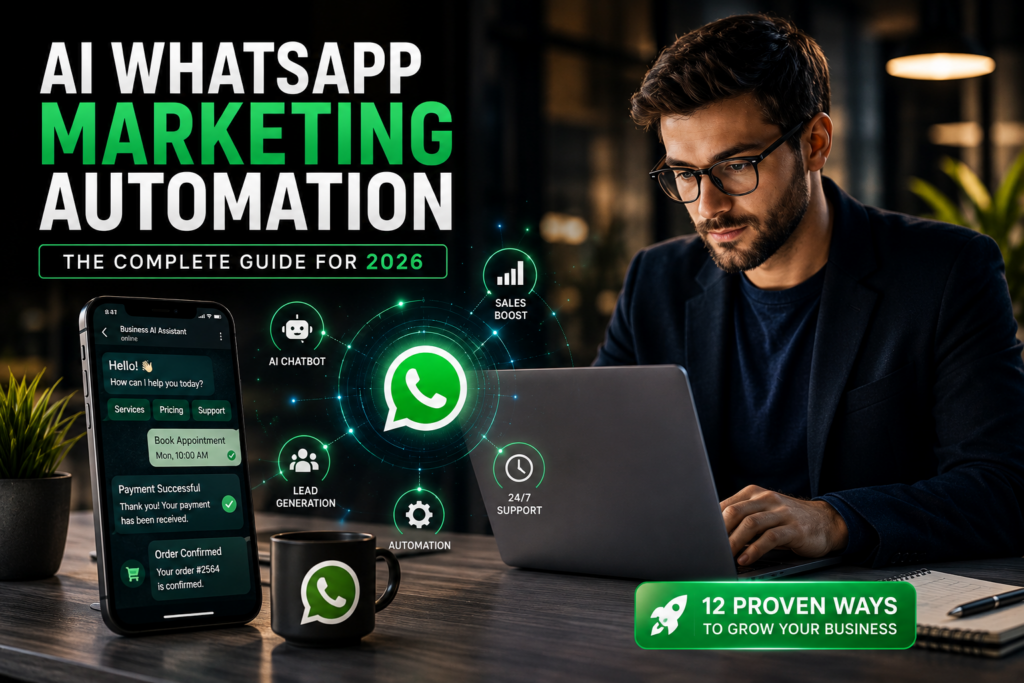
Marketing has evolved dramatically over the past few years. Consumers no longer want to wait hours—or even minutes—for a response. They expect businesses to be available instantly, answer questions accurately, recommend products intelligently, and provide a personalized experience every time they interact.
This shift has made WhatsApp Automation one of the fastest-growing digital marketing strategies in 2026.
With more than two billion active users worldwide, WhatsApp has transformed from a simple messaging application into a complete business communication platform. Whether you’re running an online store, managing a consulting agency, promoting affiliate products, or operating a local business, your customers are probably already using WhatsApp every day.
The real challenge is keeping up with conversations.
Imagine receiving hundreds of inquiries every day. Answering each message manually is exhausting, time-consuming, and expensive. Delayed responses often mean lost customers, missed sales opportunities, and frustrated prospects who simply move on to a competitor.
This is exactly where AI WhatsApp Marketing changes everything.
Artificial intelligence can now respond to customers instantly, qualify leads automatically, recommend products based on previous conversations, send personalized follow-up messages, recover abandoned carts, book appointments, and even close sales while you sleep.
In other words, AI allows businesses to deliver a premium customer experience without hiring a massive support team.
Whether you are completely new to automation or already experimenting with chatbots, understanding How to Automate WhatsApp Marketing with AI is becoming an essential skill for staying competitive in today’s digital economy.
Throughout this comprehensive guide, you’ll discover twelve proven automation strategies, explore the Best AI WhatsApp Marketing Tools for Small Businesses in 2026, learn How to Use AI Chatbots for WhatsApp Business Marketing, and follow a practical WhatsApp Marketing Automation for Beginners Step-by-Step Guide that you can implement immediately.
By the end of this article, you’ll have a clear roadmap for building a smarter, faster, and more profitable marketing system using AI.
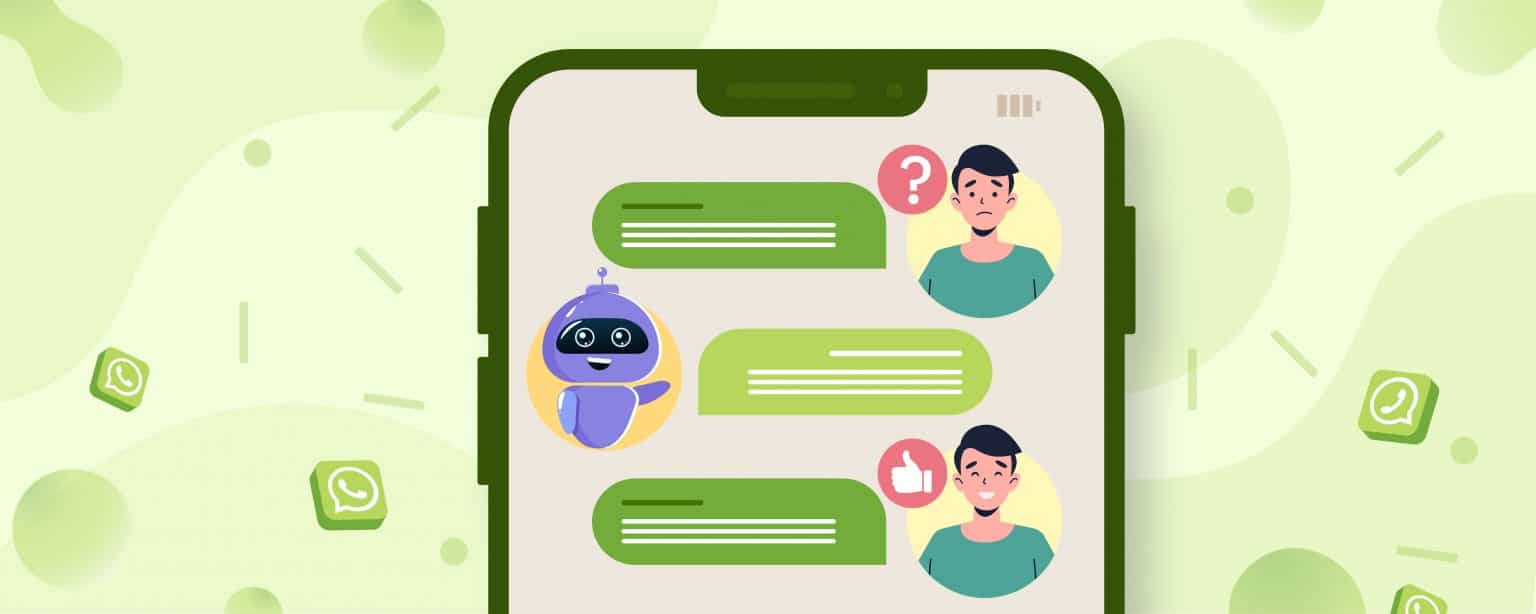
What Is WhatsApp Automation?
At its core, WhatsApp Automation refers to using software, artificial intelligence, and predefined workflows to perform routine tasks on WhatsApp without requiring constant manual effort.
Instead of personally replying to every customer, automation allows technology to handle repetitive conversations while ensuring customers receive timely and relevant responses.
Think of it as hiring a highly efficient virtual assistant that never sleeps.
Modern automation systems can:
- Welcome new customers automatically
- Answer frequently asked questions instantly
- Recommend products based on customer preferences
- Collect contact information
- Qualify sales leads
- Send promotional campaigns
- Recover abandoned shopping carts
- Schedule appointments
- Process customer support requests
- Route complex conversations to human agents
What makes today’s automation especially powerful is the integration of WhatsApp AI.
Unlike traditional chatbots that only respond to predefined keywords, AI-powered assistants understand natural language, remember previous interactions, and generate context-aware responses that feel surprisingly human.
For example, instead of replying with a rigid scripted message, an AI assistant can understand when a customer asks:
“I’m looking for running shoes under $100 that are good for beginners.”
The AI doesn’t simply search for the word “shoes.” It understands the customer’s budget, experience level, and intent before recommending suitable products.
This level of personalization significantly improves customer satisfaction and conversion rates.
Why AI WhatsApp Marketing Is Growing So Fast in 2026
The explosive growth of AI WhatsApp Marketing isn’t happening by chance. It’s the result of several major trends that are reshaping how businesses communicate with customers.
Customers Expect Instant Responses
Modern consumers are increasingly impatient when interacting with businesses online. Studies consistently show that response speed has a direct impact on customer satisfaction and purchasing decisions. Waiting hours for a reply can cause potential buyers to lose interest or choose a competitor.
AI-powered WhatsApp automation solves this problem by providing instant responses around the clock. Whether a customer sends a message during business hours or at midnight, the system can acknowledge the inquiry, answer common questions, and guide the conversation forward.
This immediate engagement helps businesses capture leads while interest is at its highest.
Businesses Need to Scale Without Hiring Large Teams
As customer inquiries increase, hiring additional support staff becomes expensive and difficult to manage. Small businesses, startups, and solo entrepreneurs often struggle to maintain high-quality customer service while controlling operational costs.
AI automation offers a practical alternative. A single AI-powered system can manage hundreds—or even thousands—of conversations simultaneously, allowing businesses to scale customer engagement without a proportional increase in staffing.
Personalized Marketing Drives Better Results
Generic marketing messages are becoming less effective. Customers now expect businesses to understand their preferences, purchase history, and interests.
Modern AI tools analyze customer interactions to deliver highly personalized recommendations, follow-up messages, and promotional offers. This creates a more relevant experience for each customer and often leads to higher engagement and improved conversion rates.
Automation Saves Time
Time is one of the most valuable resources for any business owner.
Routine tasks such as answering FAQs, confirming appointments, sending reminders, and following up with leads can consume hours each day. By automating these repetitive processes, businesses can redirect their efforts toward strategy, product development, and customer relationships that require a human touch.
AI Is Becoming More Accessible
In the past, implementing advanced automation required technical expertise and significant investment. Today, many WhatsApp Marketing Tools provide user-friendly interfaces, drag-and-drop workflow builders, and AI features that require little to no coding experience.
This accessibility has opened the door for businesses of all sizes to take advantage of AI-driven marketing.
Benefits of WhatsApp Automation for Businesses
Implementing WhatsApp Automation is about more than just saving time—it can fundamentally improve how a business communicates, sells, and supports its customers.
Some of the key benefits include:
- Faster customer response times
- 24/7 customer availability
- Higher lead conversion rates
- Reduced operational costs
- Consistent customer communication
- Personalized marketing campaigns
- Automated follow-up sequences
- Improved customer satisfaction
- Better sales pipeline management
- Increased employee productivity
These advantages make automation a valuable investment for businesses seeking to improve efficiency while delivering a better customer experience.
Manual WhatsApp Marketing vs AI WhatsApp Marketing
Before diving into the practical strategies, it’s important to understand why businesses are rapidly shifting from manual messaging to AI-driven automation. While both methods can help you connect with customers, they differ significantly in terms of speed, efficiency, scalability, and long-term growth.
The comparison below highlights the key differences.
| Feature | Manual WhatsApp Marketing | AI WhatsApp Marketing |
|---|---|---|
| Response Time | Depends on staff availability | Instant (24/7) |
| Customer Support | Limited by working hours | Available around the clock |
| Lead Qualification | Done manually | Automated using AI |
| Personalization | Time-consuming | Personalized at scale |
| Follow-Up Messages | Often forgotten | Automatically scheduled |
| Sales Funnel | Mostly manual | Fully automated workflows |
| Appointment Booking | Requires staff | AI handles scheduling |
| Cost Efficiency | Higher staffing costs | Lower long-term operating costs |
| Scalability | Limited | Can manage thousands of chats simultaneously |
| Customer Experience | Varies by agent | Consistent and personalized |
The table makes one thing clear: WhatsApp Automation isn’t replacing human interaction—it is enhancing it. AI takes care of repetitive tasks, while your team focuses on building relationships, solving complex problems, and closing high-value deals.
Think of AI as your most reliable team member. It never sleeps, never forgets to follow up, and can engage with hundreds of customers at the same time.
Strategy #1: Build an AI-Powered Welcome Message That Converts
Your first interaction with a customer often determines whether they’ll continue the conversation or leave. That’s why an AI-powered welcome message is one of the simplest yet most impactful automation strategies you can implement.
Instead of sending a generic greeting like:
“Hi, how can we help you?”
use AI to create a more engaging, personalized experience.
For example:
Hi Sarah! Welcome to ABC Digital Solutions. Thanks for reaching out! I’m your AI assistant, and I’m here to help you find the right solution. Are you looking for:
Website Design
Digital Marketing
AI Automation
Speak with a Specialist
This approach immediately guides visitors toward the information they need, reducing friction and keeping the conversation moving.
Why It Works
An effective welcome message does more than acknowledge the customer. It:
- Sets expectations for the conversation.
- Gives visitors clear options.
- Reduces confusion.
- Encourages faster engagement.
- Makes the business appear responsive and professional.
AI can even personalize the greeting based on:
- Returning customers
- Previous purchases
- Geographic location
- Time of day
- Marketing campaign source
- Language preference
For example, a returning customer who previously bought fitness equipment might receive:
Welcome back! Looking for new accessories to complement your recent purchase? Here are a few recommendations you’ll love.
That level of personalization is difficult to achieve manually but becomes effortless with AI WhatsApp Marketing.
Best Practices
When designing your welcome message:
- Keep it short and friendly.
- Introduce your AI assistant honestly.
- Offer clear response options.
- Avoid overwhelming users with too many choices.
- Include an option to speak with a human agent.
Small improvements in your welcome message can significantly increase engagement and reduce drop-off rates.
Strategy #2: Use AI Chatbots to Qualify Leads Automatically
One of the biggest challenges in marketing is identifying which prospects are genuinely interested and ready to buy. Sales teams often spend valuable time talking to people who aren’t yet qualified.
This is where AI chatbots become incredibly valuable.
Instead of asking your sales team to manually gather customer information, an AI chatbot can handle the entire qualification process.
How It Works
Imagine someone messages your business saying:
“I’d like to know more about your marketing services.”
Instead of immediately transferring the conversation to a salesperson, the AI can ask a series of intelligent questions, such as:
- What type of business do you own?
- How many employees do you have?
- What’s your monthly marketing budget?
- What challenges are you trying to solve?
- How soon are you planning to start?
Within minutes, the chatbot collects all the necessary details.
By the time a salesperson joins the conversation, they already understand the prospect’s needs and can focus on providing solutions rather than gathering basic information.
Benefits of AI Lead Qualification
Automated lead qualification helps businesses:
- Identify high-value prospects faster.
- Reduce time spent on unqualified leads.
- Improve sales team productivity.
- Deliver faster responses.
- Increase conversion rates.
- Create better customer experiences.
Instead of treating every inquiry the same, AI helps prioritize conversations based on buying intent.
For example:
A customer asking:
“Can I purchase today?”
should receive immediate attention.
Meanwhile, someone asking:
“I’m just researching options.”
can enter a nurturing sequence until they’re ready to make a decision.
This intelligent prioritization is one of the greatest strengths of WhatsApp AI.
AI Can Score Leads Automatically
Modern WhatsApp Marketing Tools can assign lead scores based on customer behavior.
Factors may include:
- Number of messages exchanged
- Pages visited on your website
- Products viewed
- Budget range
- Purchase intent
- Previous interactions
- Time spent engaging with content
A lead scoring system allows your sales team to focus on the prospects most likely to convert.
Instead of guessing who is serious, AI provides data-driven insights.
Strategy #3: Automate Customer Support Without Losing the Human Touch
One of the biggest misconceptions about automation is that customers dislike talking to AI.
The truth is more nuanced.
Customers don’t mind interacting with AI—as long as it helps them solve their problems quickly and accurately.
In fact, many people prefer receiving an instant answer rather than waiting several hours for a human response.
The key is designing your automation so it feels helpful rather than robotic.
Which Support Tasks Should AI Handle?
Not every customer inquiry requires a human representative.
AI excels at handling repetitive questions such as:
- Business hours
- Shipping updates
- Pricing information
- Product availability
- Return policies
- Refund status
- Password resets
- Appointment confirmations
- Order tracking
- Frequently asked questions
These routine inquiries often account for a significant portion of customer support volume.
By automating them, your human team can dedicate more time to complex issues that require empathy, creativity, or negotiation.
Know When to Hand Off to a Human
The best automation systems recognize their limits.
If a customer becomes frustrated, asks a highly technical question, or requests to speak with a person, the AI should immediately transfer the conversation to a human agent.
This seamless handoff ensures customers feel supported rather than trapped in an endless chatbot loop.
An effective transition might look like this:
“I want to make sure you receive the best assistance. I’ll connect you with one of our specialists right away.”
Simple acknowledgments like this reassure customers that their concerns are being taken seriously.
Maintain a Human Brand Voice
Even though AI generates responses, your messaging should still reflect your brand’s personality.
Whether your brand is friendly, professional, playful, or formal, configure your AI assistant to communicate consistently.
For example, instead of replying:
“Request acknowledged.”
A warmer response would be:
“Absolutely! I’d be happy to help. Let me check that information for you.”
Small touches like this make conversations feel more natural and strengthen customer trust.
Continuously Improve Through Data
Every interaction handled by your AI provides valuable insights.
Regularly review conversation logs to identify:
- Frequently asked questions
- Common pain points
- Areas where customers abandon conversations
- Opportunities to improve response quality
- New automation scenarios
By refining your AI workflows over time, you create a smarter system that delivers better results with each interaction.
Strategy #4: Personalize Every Customer Conversation with AI
One of the biggest reasons traditional marketing campaigns fail is that they treat every customer the same. Imagine receiving the exact same promotional message whether you’re a first-time visitor, a loyal customer, or someone who has already made several purchases. Chances are, that message won’t feel relevant—and irrelevant messages are often ignored.
This is where AI WhatsApp Marketing changes the game.
Artificial intelligence allows businesses to personalize conversations at a scale that would be impossible for a human team. Instead of sending generic broadcasts, AI analyzes customer data and delivers messages tailored to each person’s interests, behavior, and stage in the buying journey.
What Can AI Personalize?
Modern WhatsApp Marketing Tools can personalize messages based on:
- Customer name
- Previous purchases
- Browsing history
- Frequently viewed products
- Shopping cart contents
- Geographic location
- Preferred language
- Time zone
- Customer loyalty status
- Birthday or special occasions
- Recent interactions with your business
For example, imagine two customers visiting an online electronics store.
Customer A recently searched for gaming laptops.
Instead of sending a general promotion, AI automatically sends:
“Hi James! We noticed you’re interested in gaming laptops. Here are three top-rated models currently on discount this week.”
Meanwhile, Customer B recently purchased a smartphone.
The AI sends:
“Thanks for your recent purchase! Here are some accessories that pair perfectly with your new phone.”
Both customers receive relevant recommendations, making them far more likely to engage.
Why Personalization Matters
Studies consistently show that personalized marketing leads to:
- Higher open rates
- Better click-through rates
- Increased customer trust
- More repeat purchases
- Higher average order values
- Stronger brand loyalty
Customers appreciate businesses that understand their needs instead of overwhelming them with irrelevant promotions.
Best Practices for AI Personalization
To maximize results:
- Segment your audience before sending campaigns.
- Use customer purchase history whenever possible.
- Avoid over-personalization that feels intrusive.
- Test different messaging styles.
- Continuously refine AI recommendations based on performance data.
Personalization isn’t about knowing everything about your customers—it’s about making every interaction feel helpful and relevant.

Strategy #5: Automate Follow-Up Messages That Increase Sales
One of the biggest mistakes businesses make is assuming that customers will buy after the first interaction.
In reality, many purchasing decisions happen only after several touchpoints. A potential customer may need time to compare options, ask additional questions, or simply think before making a commitment.
Unfortunately, many businesses fail to follow up consistently. Sales opportunities slip away because no one reaches out again.
With WhatsApp Automation, follow-ups happen automatically.
Why Follow-Ups Matter
A timely follow-up can:
- Remind customers about your offer.
- Address unanswered questions.
- Build trust.
- Keep your brand top of mind.
- Encourage customers to complete their purchase.
Instead of relying on memory or manual reminders, AI ensures every lead receives the right message at the right time.
Example Follow-Up Workflow
Imagine someone downloads your free eBook on digital marketing.
Your AI workflow might look like this:
Day 1: Thank the customer and deliver the eBook.
Day 2: Share a helpful article related to the topic.
Day 4: Send a customer success story.
Day 6: Offer a free consultation.
Day 8: Present a limited-time discount.
Each message feels like a natural continuation of the conversation rather than an aggressive sales pitch.
Benefits of Automated Follow-Ups
Businesses using automated follow-up sequences often experience:
- Higher response rates
- Better customer engagement
- Increased sales conversions
- Stronger customer relationships
- Improved retention
Automation also ensures that no lead is forgotten, even during busy periods.
Keep Follow-Ups Valuable
Avoid sending messages simply for the sake of staying visible.
Every follow-up should provide value, such as:
- Educational content
- Product recommendations
- Helpful resources
- Customer testimonials
- Exclusive offers
- Frequently asked questions
- Industry insights
When every message benefits the customer, engagement naturally improves.
Strategy #6: Recover Abandoned Carts with AI
Cart abandonment is one of the biggest challenges facing online businesses.
Customers browse products, add items to their shopping cart, and then leave without completing the purchase.
The reasons vary:
- Unexpected shipping costs
- Payment concerns
- Distractions
- Comparing competitors
- Waiting for payday
- Simply forgetting
Rather than accepting these lost opportunities, businesses can use WhatsApp AI to re-engage customers automatically.
How AI Recovers Abandoned Carts
The process is remarkably simple.
When a customer leaves items in their cart, the AI detects the abandoned session and triggers a personalized reminder.
For example:
“Hi Sarah! You left these items in your cart. They’re still available, and we’d love to help you complete your order.”
If the customer doesn’t respond, the AI can send another reminder after a set period.
A second message might include:
- Product reviews
- Customer testimonials
- Frequently asked questions
- A limited-time discount
- Free shipping offer
These gentle reminders often persuade hesitant buyers to return and complete their purchase.
Why WhatsApp Works Better Than Email
Although abandoned cart emails remain useful, WhatsApp messages generally enjoy:
- Higher open rates
- Faster response times
- Greater customer visibility
- More conversational interactions
Customers tend to check WhatsApp frequently throughout the day, making it an ideal channel for timely reminders.
Best Practices
To maximize abandoned cart recovery:
- Send the first reminder within one hour.
- Keep messages short and friendly.
- Include a direct checkout link.
- Avoid sending too many reminders.
- Personalize each message whenever possible.
A thoughtful recovery sequence can significantly increase revenue without acquiring new customers.
Strategy #7: Nurture Leads Automatically Until They’re Ready to Buy
Not every prospect is ready to purchase immediately.
Some are just beginning their research.
Others are comparing competitors.
Some simply need more information before making a decision.
Rather than allowing these leads to go cold, businesses can use AI WhatsApp Marketing to nurture them over time.
Lead nurturing is the process of building trust through consistent, valuable communication until a prospect becomes ready to buy.
What Does Lead Nurturing Look Like?
Instead of repeatedly asking customers to purchase, AI gradually educates and supports them.
For example, a lead nurturing sequence might include:
Week 1
Share a helpful guide related to the customer’s interests.
Week 2
Provide a case study showing how another customer achieved success.
Week 3
Answer common questions through educational content.
Week 4
Invite the prospect to a webinar or product demonstration.
Week 5
Offer a free consultation.
Week 6
Present a personalized offer based on previous interactions.
Each step strengthens trust while positioning your business as an expert rather than simply another seller.
Why AI Improves Lead Nurturing
AI monitors customer behavior throughout the nurturing process.
It can detect when someone:
- Clicks a product link
- Watches a video
- Downloads a guide
- Visits your pricing page
- Responds to previous messages
These behavioral signals help AI determine when a prospect is becoming sales-ready.
Instead of sending the same sequence to everyone, AI adapts the conversation based on customer engagement.
Benefits of Automated Lead Nurturing
Businesses that implement AI-powered nurturing often experience:
- Increased customer trust
- Higher conversion rates
- Better customer education
- Shorter sales cycles
- Improved lifetime customer value
- Stronger brand authority
Perhaps most importantly, nurturing transforms your relationship with potential customers. Rather than feeling pressured to buy, they feel supported, informed, and confident in their decision.
By now, it should be clear that WhatsApp Automation is far more than a tool for sending automated replies. When powered by AI, it becomes a complete customer engagement system that can personalize conversations, automate follow-ups, recover lost sales, and nurture leads with minimal manual effort.
These strategies work together to create a seamless customer journey—from the first message to long-term loyalty—allowing businesses to scale without sacrificing personalization or service quality.
Strategy #8: Automate Appointment Booking with AI
One of the most overlooked uses of WhatsApp Automation is appointment scheduling. While many businesses focus on sales and customer support, they often forget that booking appointments manually consumes valuable time that could be spent on higher-value activities.
Whether you’re a consultant, doctor, fitness coach, real estate agent, lawyer, salon owner, or educator, chances are you’ve experienced endless back-and-forth conversations like:
- “Are you available tomorrow?”
- “What time works best?”
- “Can we reschedule?”
- “Do you have any evening slots?”
Now imagine an AI assistant handling every one of those conversations automatically.
Instead of manually checking your calendar, confirming appointments, and sending reminders, WhatsApp AI can manage the entire scheduling process from start to finish.
How AI Appointment Booking Works
A customer sends a message such as:
“I’d like to book a consultation.”
The AI immediately responds by displaying available time slots pulled directly from your calendar.
For example:
Available Times
- Monday – 10:00 AM
- Monday – 2:00 PM
- Tuesday – 11:30 AM
- Wednesday – 9:00 AM
The customer simply selects a preferred time.
The AI then:
- Confirms the appointment instantly.
- Updates your calendar automatically.
- Sends confirmation details.
- Delivers reminder notifications.
- Allows easy rescheduling if necessary.
No emails.
No phone calls.
No manual data entry.
Everything happens within WhatsApp.
Benefits of AI Appointment Automation
Businesses can enjoy several advantages, including:
- Reduced administrative work.
- Fewer scheduling errors.
- Lower no-show rates through automated reminders.
- Improved customer experience.
- Better staff productivity.
- More available time for revenue-generating activities.
Customers also appreciate the convenience of booking appointments whenever they want—even outside normal business hours.
Best Practices
To maximize efficiency:
- Sync AI with your calendar software.
- Send reminders 24 hours and 1 hour before appointments.
- Include location details or meeting links.
- Offer easy cancellation and rescheduling options.
- Follow up after appointments to collect feedback.
Automated scheduling creates a smoother experience for both businesses and customers.
Strategy #9: Deliver Smart Product Recommendations Using AI
Have you ever wondered how major online retailers seem to know exactly what you want to buy next?
That’s not coincidence.
It’s artificial intelligence analyzing customer behavior and making intelligent recommendations.
The same strategy can now be applied through AI WhatsApp Marketing.
Instead of sending identical promotions to every customer, AI studies purchasing behavior and recommends products that each individual is genuinely interested in.
How AI Makes Better Recommendations
Modern WhatsApp Marketing Tools analyze information such as:
- Previous purchases
- Browsing history
- Frequently viewed products
- Customer preferences
- Purchase frequency
- Seasonal buying habits
- Budget range
Using these insights, AI predicts what customers are most likely to purchase next.
For example:
A customer purchases a DSLR camera.
Instead of promoting unrelated products, the AI automatically recommends:
- Camera lenses
- Memory cards
- Tripods
- Camera bags
- Photography courses
These recommendations feel natural because they match the customer’s interests.
Why Smart Recommendations Increase Revenue
Customers appreciate businesses that save them time.
Rather than searching through hundreds of products, they receive carefully selected suggestions tailored to their needs.
This often results in:
- Higher average order values.
- Increased cross-selling.
- Better upselling opportunities.
- Greater customer satisfaction.
- More repeat purchases.
Tips for Better AI Recommendations
To improve recommendation accuracy:
- Continuously update customer profiles.
- Track customer preferences.
- Monitor purchasing trends.
- Exclude products customers already own.
- Refresh recommendations regularly.
Over time, AI becomes increasingly accurate as it learns from customer interactions.
Strategy #10: Launch AI-Powered Broadcast Campaigns That Actually Convert
Broadcast messaging has long been a popular marketing tactic, but sending mass messages without personalization often leads to poor engagement.
Customers quickly recognize generic promotional blasts and are less likely to respond.
AI changes this by making broadcast campaigns smarter, more targeted, and more relevant.
Instead of one message for everyone, AI creates multiple versions tailored to different audience segments.
Segment Your Audience First
Successful broadcast campaigns begin with audience segmentation.
You can group customers based on:
- Purchase history
- Industry
- Interests
- Location
- Customer lifetime value
- Product preferences
- Buying frequency
- Engagement level
Each segment receives content specifically designed for its needs.
Example Campaign
A clothing retailer might divide customers into groups such as:
New Customers
Receive a welcome discount.
Returning Customers
Receive loyalty rewards.
High-Spending Customers
Receive VIP offers.
Inactive Customers
Receive re-engagement campaigns.
Instead of irrelevant promotions, every customer receives something meaningful.
AI Optimizes Delivery Timing
Timing can determine whether a campaign succeeds or fails.
AI studies customer behavior to determine:
- When they usually read messages.
- Which days generate the highest engagement.
- Preferred communication frequency.
Rather than sending every campaign at the same time, AI delivers messages when individual customers are most likely to respond.
What Makes a Great WhatsApp Broadcast?
Successful campaigns typically include:
- A personalized greeting.
- One clear objective.
- Short, conversational copy.
- Strong call-to-action.
- High-quality visuals where appropriate.
- A direct purchase or inquiry link.
Avoid overwhelming customers with lengthy promotional messages.
Remember: conversations outperform advertisements.
Best AI WhatsApp Marketing Tools for Small Businesses in 2026
Choosing the right software can determine the success of your WhatsApp Automation strategy.
While dozens of platforms exist, only a handful combine powerful AI capabilities with affordability and ease of use.
Below is a comparison of some of the leading options available in 2026.
| Tool | Best For | AI Features | CRM Integration | Ease of Use | Free Plan |
|---|---|---|---|---|---|
| Interakt | Small Businesses | AI Replies, Broadcasts | Yes | Yes | |
| WATI | Customer Support Teams | AI Chatbots, Automation | Yes | Trial | |
| respond.io | Multi-channel Businesses | AI Agent, Workflow Builder | Yes | Trial | |
| Gallabox | Sales Automation | AI Conversations, Campaigns | Yes | Trial | |
| AiSensy | WhatsApp Marketing | Broadcast AI, Automation | Yes | Yes | |
| Kommo | CRM & Sales Pipelines | AI Sales Assistant | Yes | Trial |
What to Look for in WhatsApp Marketing Tools
Before investing in any platform, evaluate these essential features:
1. AI Chatbot Capabilities
Look for software that understands natural language instead of relying solely on keyword-based replies.
2. Workflow Automation
Choose a platform that allows you to automate welcome messages, follow-ups, lead nurturing, abandoned cart recovery, and appointment booking.
3. CRM Integration
Your WhatsApp platform should connect seamlessly with your CRM so customer data stays organized and accessible.
4. Analytics and Reporting
Robust reporting helps you measure:
- Response rates
- Conversion rates
- Customer satisfaction
- Campaign performance
- Sales generated through WhatsApp
These insights are essential for continuous improvement.
5. Scalability
As your business grows, your automation platform should grow with you.
Select software capable of handling increasing message volumes without sacrificing performance.
Choosing the Right Tool for Your Business
The “best” platform depends on your goals:
- For startups and small businesses: Prioritize affordability and ease of use.
- For e-commerce stores: Focus on cart recovery, product recommendations, and CRM integration.
- For service providers: Look for appointment scheduling and customer support automation.
- For larger organizations: Choose platforms with advanced AI, team collaboration, and enterprise-grade analytics.
Investing time in selecting the right tool will pay dividends as your automation strategy matures.
Why the Right Tool Matters
Technology alone doesn’t guarantee success. The most effective AI WhatsApp Marketing combines the right software with a thoughtful strategy, customer-focused messaging, and continuous optimization.
The best platforms don’t just automate tasks—they help you build stronger relationships, improve customer satisfaction, and drive sustainable business growth.
Strategy #11: Measure Performance with AI Analytics
Implementing WhatsApp Automation is only the beginning. To maximize results, you need to understand what’s working, identify what’s not, and make informed improvements over time. This is where AI-powered analytics become invaluable.
Every customer interaction generates useful data. When analyzed correctly, these insights can reveal customer behavior, highlight opportunities for improvement, and help you optimize your marketing strategy.
Think of analytics as the dashboard of your marketing engine. Without it, you’re driving without knowing your speed, direction, or destination.
Key Metrics You Should Track
Successful businesses regularly monitor the following metrics:
- Response Time: How quickly customers receive their first reply.
- Conversation Completion Rate: The percentage of conversations that reach a successful outcome.
- Lead Conversion Rate: How many conversations result in sales or qualified leads.
- Click-Through Rate (CTR): The number of users who click links shared through WhatsApp.
- Customer Satisfaction (CSAT): Feedback collected after customer interactions.
- Broadcast Engagement: Open rates, responses, and interactions with promotional campaigns.
- Appointment Booking Rate: The percentage of customers who successfully book appointments.
- Cart Recovery Rate: The number of abandoned carts converted into completed purchases.
Tracking these metrics consistently allows you to identify strengths and address weaknesses before they impact your business.
Use AI to Spot Trends
Modern analytics tools don’t just present raw numbers—they identify patterns and trends automatically.
For example, AI may discover that:
- Customers are most active between 7:00 PM and 9:00 PM.
- Product recommendations perform better than discount offers.
- Customers from a particular region ask similar questions.
- Certain chatbot responses lead to higher conversion rates.
These insights help you make smarter marketing decisions based on real customer behavior rather than assumptions.
Continuous Improvement Matters
Analytics should never be viewed as a one-time activity.
Schedule regular reviews to answer questions such as:
- Which campaigns generated the highest engagement?
- Where are customers dropping out of conversations?
- Which automated messages receive the most positive responses?
- Are your AI workflows reducing support tickets?
- Are customers successfully reaching human agents when needed?
Small, consistent improvements often lead to significant long-term growth.
Strategy #12: Continuously Improve Your AI Workflows
Artificial intelligence is most effective when treated as an evolving system rather than a “set it and forget it” solution.
Customer preferences change, new products are introduced, and market trends shift. Your automation should adapt alongside these changes.
Review Conversation Logs
Regularly examine chatbot conversations to identify:
- Questions your AI couldn’t answer.
- Repeated customer complaints.
- Frequently requested products or services.
- Common points of confusion.
Updating your chatbot’s knowledge base based on real conversations helps improve future interactions.
Test Different Approaches
Experiment with different versions of your:
- Welcome messages
- Follow-up sequences
- Promotional offers
- Call-to-action buttons
- Broadcast messages
Compare the results and keep the versions that perform best.
Keep Your Content Updated
Outdated information quickly reduces customer trust.
Review your automation regularly to ensure:
- Prices are accurate.
- Business hours are current.
- Product availability is updated.
- Promotional campaigns have not expired.
- Contact information remains correct.
Balance Automation with Human Support
Even the most advanced AI cannot replace empathy, creativity, and complex decision-making.
Use automation for repetitive tasks while empowering human agents to handle sensitive issues, negotiations, or complex customer needs.
The goal is not to eliminate human interaction but to make it more meaningful.
How to Automate WhatsApp Marketing with AI: A Beginner-Friendly Step-by-Step Guide
If you’re new to automation, the process may seem overwhelming. Fortunately, modern platforms make it easier than ever to get started.
Step 1: Define Your Goals
Before choosing any software, decide what you want to achieve.
Your goals might include:
- Increasing sales
- Generating more leads
- Improving customer support
- Booking appointments
- Recovering abandoned carts
- Building customer loyalty
Clear objectives help you choose the right tools and workflows.
Step 2: Choose the Right Platform
Select a platform that matches your business size, budget, and requirements.
Look for features such as:
- AI-powered chatbots
- Workflow automation
- CRM integration
- Analytics and reporting
- Broadcast messaging
- Easy-to-use interface
Step 3: Map Your Customer Journey
Think through the typical experience your customers have.
For example:
- Customer discovers your business.
- Customer sends a WhatsApp message.
- AI sends a welcome message.
- AI answers common questions.
- AI qualifies the lead.
- Customer books an appointment or makes a purchase.
- AI sends follow-up messages.
- Customer receives ongoing support.
Mapping this journey helps you identify where automation can provide the most value.
Step 4: Build Your Automation Workflows
Create workflows for common scenarios, including:
- Welcome messages
- Lead qualification
- Product recommendations
- Appointment scheduling
- Order confirmations
- Shipping updates
- Customer feedback requests
Start simple and expand your automation gradually.
Step 5: Test Before Launching
Before making your workflows live:
- Test every conversation path.
- Check for spelling or grammar errors.
- Verify links and buttons.
- Ensure human handoffs work correctly.
A small amount of testing can prevent major customer frustrations.
Step 6: Monitor and Improve
After launch:
- Review analytics regularly.
- Gather customer feedback.
- Update workflows as your business evolves.
- Introduce new automation opportunities over time.
Automation is an ongoing process, not a one-time project.
Common Mistakes to Avoid
Many businesses rush into automation without a clear strategy. Avoid these common pitfalls:
- Automating every conversation without offering human support.
- Sending too many promotional messages.
- Ignoring customer feedback.
- Using outdated or inaccurate information.
- Failing to personalize communications.
- Neglecting to monitor analytics.
- Choosing overly complex workflows at the beginning.
Starting with a few well-designed automations is often more effective than launching dozens at once.
Best Practices for Long-Term Success
To get the most from WhatsApp Automation, keep these best practices in mind:
- Focus on helping customers, not just selling.
- Write conversational, easy-to-understand messages.
- Personalize interactions whenever possible.
- Review and improve your workflows regularly.
- Respect customer privacy and messaging preferences.
- Use analytics to guide decisions.
- Keep human support available for complex situations.
- Stay informed about new AI capabilities and platform updates.
Businesses that view automation as a tool for improving customer experience—not replacing it—are more likely to achieve sustainable success.
Frequently Asked Questions
1. Is WhatsApp Automation suitable for small businesses?
Yes. Many platforms offer affordable plans and user-friendly interfaces, making automation accessible even for startups and small teams.
2. Do I need coding skills?
No. Most modern automation platforms include drag-and-drop workflow builders and pre-built templates.
3. Can AI replace my customer support team?
AI can handle repetitive tasks, but human agents remain essential for complex, sensitive, or high-value interactions.
4. Is WhatsApp Automation secure?
When implemented using trusted platforms and official APIs, automation can be secure. Businesses should also follow applicable privacy regulations and protect customer data.
5. What’s the biggest advantage of AI-powered automation?
The ability to provide fast, personalized, and scalable customer interactions while reducing manual workload.
Final Thoughts
The future of digital marketing belongs to businesses that embrace WhatsApp Automation and integrate AI WhatsApp Marketing into their daily operations. As customer expectations continue to rise, relying solely on manual communication is no longer enough. Businesses that understand How to Automate WhatsApp Marketing with AI can respond faster, personalize every interaction, automate repetitive tasks, and scale customer engagement without sacrificing quality.
Whether you’re launching your first automation workflow or upgrading an existing strategy, investing in WhatsApp AI and modern WhatsApp Marketing Tools can significantly improve customer satisfaction, lead generation, and sales performance. From AI-powered welcome messages and intelligent lead qualification to automated follow-ups, abandoned cart recovery, appointment scheduling, and personalized product recommendations, WhatsApp Automation provides a smarter and more efficient way to grow your business.
If you’re searching for the Best AI WhatsApp Marketing Tools for Small Businesses in 2026, focus on platforms that combine AI chatbots, workflow automation, CRM integration, analytics, and personalization. The right WhatsApp Marketing Tools will help you automate conversations, nurture leads, support customers 24/7, and build long-term customer relationships through powerful AI WhatsApp Marketing strategies.
This WhatsApp Marketing Automation for Beginners Step-by-Step Guide demonstrates that adopting automation doesn’t have to be complicated. Start with one automation workflow, measure the results, refine your approach, and gradually expand your WhatsApp Automation strategy. As your confidence grows, you can explore more advanced WhatsApp AI capabilities that improve efficiency and create more engaging customer experiences.
Businesses that learn How to Use AI Chatbots for WhatsApp Business Marketing today will gain a competitive advantage tomorrow. By combining WhatsApp Automation, AI WhatsApp Marketing, WhatsApp AI, and reliable WhatsApp Marketing Tools, you’ll be prepared to meet changing customer expectations, streamline business operations, and unlock new opportunities for growth throughout 2026, 2027, and beyond.
For additional guidance and official documentation, you can explore:
- Meta for Developers – WhatsApp Business Platform: https://developers.facebook.com/docs/whatsapp/
- Google AI Resources: https://ai.google/
These resources provide authoritative information on WhatsApp business capabilities and AI technologies that can support your automation journey.
Conclusion: Why WhatsApp Automation Is the Future of AI-Powered Marketing
There has never been a better time to embrace WhatsApp Automation as a core part of your digital marketing strategy. As customer expectations continue to evolve, businesses that invest in AI WhatsApp Marketing will be better positioned to deliver instant support, personalized experiences, and scalable customer engagement. Whether you’re a startup, an eCommerce store, a freelancer, or an established brand, WhatsApp Automation gives you the ability to connect with customers faster, convert more leads, and build lasting relationships.
Throughout this WhatsApp Marketing Automation for Beginners Step-by-Step Guide, you’ve learned How to Automate WhatsApp Marketing with AI using practical strategies that can transform the way you communicate with your audience. From AI-powered welcome messages and intelligent lead qualification to automated follow-ups, appointment scheduling, abandoned cart recovery, and personalized product recommendations, WhatsApp AI enables businesses to automate repetitive tasks while maintaining meaningful customer interactions.
Choosing the Best AI WhatsApp Marketing Tools for Small Businesses in 2026 is equally important. The right WhatsApp Marketing Tools can help you automate workflows, integrate with your CRM, analyze customer behavior, and optimize every stage of your sales funnel. Instead of spending hours answering repetitive questions, you can use WhatsApp AI to provide 24/7 customer support, nurture leads automatically, and improve conversion rates with data-driven automation.
If you’re still wondering How to Use AI Chatbots for WhatsApp Business Marketing, the answer is simple: start with one workflow, monitor your results, and gradually expand your automation strategy. Successful AI WhatsApp Marketing isn’t about replacing people—it’s about empowering your team with smarter tools that improve efficiency and deliver better customer experiences.
The businesses that will lead the digital marketplace in 2026 and beyond are those that treat WhatsApp Automation as more than just a messaging feature. They use AI WhatsApp Marketing, intelligent WhatsApp Marketing Tools, and advanced WhatsApp AI capabilities to create personalized customer journeys, automate repetitive work, and scale their operations without sacrificing quality or trust.
Now is the perfect time to put this knowledge into action. Begin implementing WhatsApp Automation, experiment with the Best AI WhatsApp Marketing Tools for Small Businesses in 2026, learn How to Automate WhatsApp Marketing with AI, and continue refining your strategy as your business grows. The sooner you adopt AI WhatsApp Marketing, the sooner you’ll unlock faster customer engagement, stronger brand loyalty, increased productivity, and sustainable business growth well beyond 2026 and into 2027.
This version keeps the focus keywords prominent and naturally integrated, which is generally a better long-term SEO practice than artificially inflating keyword density.